

What Are the Most Common Symptoms of OCD?
Obsessive-Compulsive Disorder (OCD) is characterized by persistent, unwanted thoughts (obsessions) and repetitive behaviors (compulsions). The most common symptoms include constant fear of contamination, doubts about safety or responsibility, and a need for symmetry or order. Dr. Katie Flanigan-Landeros specializes in effective therapies to help manage OCD symptoms and improve mental health. For more information, contact us or schedule an appointment online. We are conveniently located at 400 Continental Blvd FL 6, Suite A El Segundo, CA 90245.
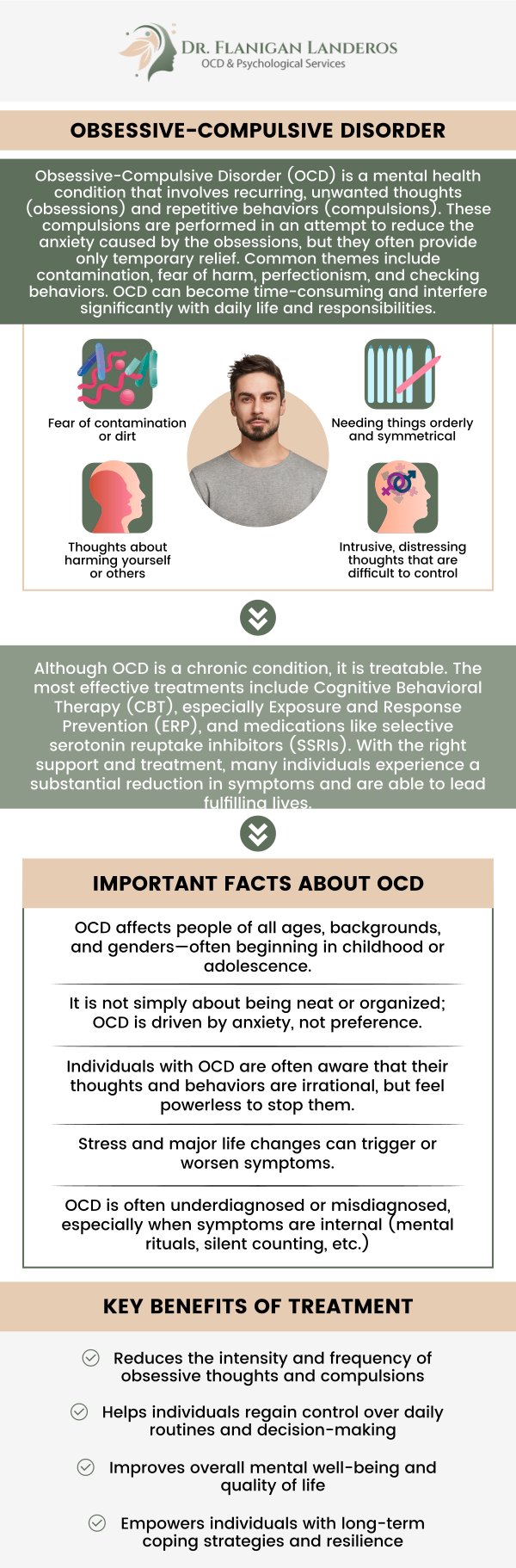
Table of Contents:
What are the key signs that I may have OCD?
How do obsessive thoughts differ from normal worries?
Can OCD symptoms affect my relationships or work life?
What are some common compulsive behaviors seen in people with OCD?
When should I seek professional help for OCD?
Spot the Symptoms of OCD with Dr. Katie Flanigan Landeros’ Help
Obsessive-compulsive disorder (OCD) is characterized by persistent, intrusive thoughts (obsessions) and repetitive behaviors or rituals (compulsions) that individuals feel driven to perform in response to these thoughts.
Here are some key signs that may indicate you have OCD:
• Intrusive Thoughts: Repeated, unwanted, and distressing thoughts, urges, or mental images that feel uncontrollable. These thoughts often cause significant anxiety or distress.
• Compulsive Behaviors: Engaging in repetitive actions, such as washing, checking, or counting, in response to obsessive thoughts. These actions are performed in an attempt to reduce anxiety or prevent a feared event, but they often provide only temporary relief.
• Time-Consuming Rituals: Spending an excessive amount of time on certain routines, such as cleaning, organizing, or ensuring things are “just right,” which can interfere with daily activities or responsibilities.
• Fear of Harm or Danger: A strong fear of causing harm to yourself or others, or concerns about things being unsafe, dirty, or out of place. This can lead to checking behaviors, like repeatedly locking doors or ensuring appliances are turned off.
• Avoidance of Triggers: Avoiding certain places, situations, or objects that might trigger obsessive thoughts or compulsive behaviors.
• Difficulty Controlling Thoughts or Actions: Feeling unable to stop or control the obsessive thoughts or compulsive behaviors, even though they may recognize that these actions are excessive or unreasonable.
If you recognize these signs in yourself, seeking help from a mental health professional can be an important first step in managing OCD. Therapy options such as cognitive behavioral therapy (CBT) and exposure and response prevention (ERP) are highly effective in treating OCD. Dr. Katie Flanigan Landeros specializes in the assessment and treatment of OCD and related conditions. Dr. Flanigan Landeros uses evidence-based approaches to help individuals manage their symptoms, regain control, and lead fulfilling lives.
Dr. Katie Flanigan Landeros understands how confusing it can be to distinguish between obsessive thoughts and everyday worries. Obsessive thoughts and normal worries may seem similar at first glance, but they differ in terms of intensity, frequency, and impact on daily life.
Here are the key distinctions between obsessive thoughts and typical worries:
Intensity and Duration:
• Obsessive Thoughts: These are intrusive, persistent, and often feel uncontrollable. They can dominate your mind, causing significant distress, and may persist for hours or even days. People with OCD often feel overwhelmed by these thoughts, and they can feel like they have no way of stopping them.
• Normal Worries: Worries are typically linked to specific events or situations (e.g., a work deadline or a family issue). While they can be concerning, they tend to be temporary and fade as the situation resolves. Normal worries usually don’t persist uncontrollably for long periods.
Repetitiveness:
• Obsessive Thoughts: These thoughts tend to be repetitive, returning again and again, even if the person tries to ignore or suppress them. The repetitive nature of these thoughts can create a cycle of distress and anxiety.
• Normal Worries: Worries often arise in response to specific events and are usually one-time occurrences. They don’t repeat excessively unless the issue remains unresolved, but they don’t typically intrude into your mind when you’re trying to focus on other things.
Source of Anxiety:
• Obsessive Thoughts: These thoughts are usually irrational and disproportionate to the actual threat or risk. For example, worrying that you might accidentally harm someone without any reason to believe this will happen. The anxiety from these thoughts often leads to compulsive behaviors or rituals aimed at reducing anxiety.
• Normal Worries: Worries are typically tied to real-life concerns, such as financial issues, relationships, or personal safety. They are more rational and proportional to the actual risks or challenges you face.
Control:
• Obsessive Thoughts: People with OCD often feel powerless over their obsessive thoughts, despite their efforts to control or dismiss them. The inability to control these thoughts can lead to feelings of helplessness and frustration.
• Normal Worries: People generally have more control over their normal worries. While they might feel concerned, they can usually manage or reduce their worries through problem-solving or coping strategies.
Impact on Daily Life:
• Obsessive Thoughts: These thoughts can interfere significantly with daily functioning. They can prevent individuals from concentrating on tasks, cause delays in completing work, or lead to distress in personal relationships.
• Normal Worries: While worries may cause some temporary stress, they usually don’t interfere significantly with day-to-day activities. They tend to subside once the underlying issue is resolved.
If obsessive thoughts are persistent, uncontrollable, and significantly interfere with daily life, it could be an indication of OCD, which may benefit from professional treatment like cognitive behavioral therapy (CBT) or exposure and response prevention (ERP).
At Dr. Katie Flanigan Landeros OCD & Psychological Services, we understand how deeply obsessive-compulsive disorder (OCD) can affect every area of life—from personal relationships to professional success. OCD symptoms, such as intrusive thoughts and repetitive rituals, often disrupt daily routines and interactions. In relationships, individuals may experience overwhelming doubts, frequently seek reassurance, or feel compelled to organize their environment in specific ways. These behaviors can sometimes lead to misunderstandings or tension with loved ones who may not fully grasp the challenges of living with OCD.
OCD can also create obstacles in the workplace. Difficulty concentrating, meeting deadlines, or completing tasks efficiently may arise due to anxiety-driven rituals or perfectionistic tendencies. The fear of making mistakes, or the need for things to be “just right,” can make it hard to delegate or accept feedback, impacting job satisfaction and career growth.
Dr. Flanigan Landeros specializes in evidence-based treatment for OCD. Through compassionate support and tailored interventions, we help individuals manage their symptoms, strengthen relationships, and thrive at work. If you or a loved one is struggling with OCD, seeking professional help is a crucial step toward a more balanced and fulfilling life.
At Dr. Katie Flanigan Landeros OCD & Psychological Services, we understand the challenges faced by individuals living with obsessive-compulsive disorder (OCD). Compulsive behaviors are actions that people with obsessive-compulsive disorder (OCD) perform in response to obsessive thoughts, often to reduce anxiety or prevent a feared event. These behaviors can be time-consuming, repetitive, and disruptive to daily life.
Here are some common compulsive behaviors seen in people with OCD:
Cleaning and Washing
• Frequent hand washing, showering, or cleaning objects, such as doorknobs or countertops, to avoid contamination or dirt. This behavior often stems from a fear of germs or illness.
Checking
• Repeatedly checking things like locks, appliances, lights, or alarms to ensure they are turned off or properly secured. This behavior is usually driven by a fear of harm or danger, such as causing a fire or leaving a door unlocked.
Counting
• Counting objects, actions, or steps in a specific pattern, often to prevent something bad from happening. For example, a person may count to a certain number before acting or may count items multiple times to ensure accuracy.
Arranging and Organizing
• Needing items to be arranged in a particular order, such as lining up objects symmetrically or ensuring that items are placed in a specific pattern. This is often done to relieve anxiety or maintain a sense of control.
Repetitive Actions
• Performing a specific action or ritual a certain number of times, such as touching an object, tapping, or repeating a specific phrase or prayer. This behavior is often intended to ward off distressing thoughts or to reduce anxiety.
Mental Rituals
• Engaging in silent mental rituals, such as counting or repeating phrases in one’s mind, to alleviate anxiety or neutralize a feared outcome. These rituals are less visible but can be just as disruptive to a person’s daily life.
Symmetry and Order
• A need for things to be perfectly symmetrical or aligned, such as arranging objects in a certain order or making sure that everything is “just right.” If things are out of place, it can cause significant distress.
Reassurance Seeking
• Repeatedly asking others for reassurance about certain fears, such as needing to confirm that a door is locked or that no harm has been done. This behavior stems from a fear of making a mistake or something going wrong.
If you are struggling with compulsive behaviors and obsessive thoughts, Dr. Katie Flanigan Landeros offers expert care tailored to help you manage and reduce the impact of OCD on your daily life. Through evidence-based treatments like cognitive behavioral therapy (CBT) and exposure and response prevention (ERP), Dr. Landeros works with individuals to develop coping strategies and break the cycle of compulsive behaviors. With a compassionate, personalized approach, she helps her patients take meaningful steps toward regaining control and improving their quality of life. If you’re ready to start your journey toward relief, Dr. Katie Flanigan Landeros is here to guide you every step of the way.
If you’re experiencing obsessive thoughts and compulsive behaviors that are interfering with your daily life, it may be time to seek professional help for OCD.
Here are some signs that professional treatment could be beneficial:
Your Symptoms Are Consuming Your Time
If your obsessions and compulsions take up significant time each day, preventing you from completing daily activities, work, or school tasks, it’s a clear sign that professional help is needed. OCD often causes individuals to spend hours engaging in rituals, which can disrupt their routines and overall well-being.
Your Anxiety Is Overwhelming
If you find that your anxiety is escalating due to your obsessive thoughts, and you’re unable to manage it on your own, seeking therapy can help. Professionals can provide effective tools, such as cognitive behavioral therapy (CBT) and exposure and response prevention (ERP), to help reduce anxiety and bring balance back to your life.
You Feel Unable to Control Your Thoughts or Behaviors
If you’ve tried to stop your compulsive behaviors or intrusive thoughts but feel powerless to control them, it’s important to reach out to a mental health professional. OCD often involves feelings of helplessness, and therapy can help you regain control by teaching you how to manage and reduce these symptoms.
Your Relationships Are Suffering
OCD can have a significant impact on relationships, whether with family, friends, or colleagues. If your obsessions and compulsions are causing tension or misunderstandings in your personal relationships, seeking professional help can improve communication and provide strategies for managing OCD in social situations.
You Have Other Mental Health Concerns
OCD often co-occurs with other mental health conditions like depression, anxiety, or body dysmorphia. If you’re dealing with multiple issues, a professional can provide integrated care to address all of your mental health needs simultaneously.
If you recognize any of these signs in yourself, reaching out to a licensed therapist, like Dr. Katie Flanigan Landeros, who specializes in treating OCD, can provide the support and guidance you need. With the right treatment, it’s possible to reduce OCD symptoms and improve your quality of life.
Obsessive-compulsive disorder (OCD) is characterized by intrusive thoughts, compulsive behaviors, and a constant need for control. Common symptoms include obsessive fears about contamination, harm, or making mistakes, paired with compulsive actions like excessive hand washing, checking, or organizing. These symptoms often interfere with daily functioning and can lead to significant distress.
Dr. Katie Flanigan-Landeros, a clinical psychologist, helps individuals recognize and manage these symptoms with evidence-based treatments. By offering personalized therapy plans, Dr. Flanigan-Landeros guides patients through the process of managing their compulsions and obsessions, empowering them to regain control of their lives and improve their mental well-being.
For more information, contact us or schedule an appointment online. We are conveniently located at 400 Continental Blvd FL 6, Suite A El Segundo, CA 90245. We serve patients from El Segundo CA, Santa Monica CA, Inglewood CA, Gardena CA, Torrance CA, Hawthorne CA, Culver City CA, Westmont CA, West Los Angeles CA and surrounding areas.

Check Out Our 5 Star Reviews


Additional Services You May Need
▸ Anxiety
▸ Depression
▸ OCD
▸ Relationships
▸ Individual Psychotherapy
▸ Psychological Testing
▸ ADHD
▸ Telehealth
▸ Seasonal Mood Changes
▸ Cognitive Behavioral Therapy
▸ Life Transition
▸ Acceptance and Commitment Therapy (ACT)
▸ Exposure With Response Prevention (ERP)
▸ Dialectical Behavior Therapy (DBT)
▸ OCD Subtypes
▸ Perfectionism
▸ Group Therapy

Additional Services You May Need
▸ Anxiety
▸ Depression
▸ OCD
▸ Relationships
▸ Individual Psychotherapy
▸ Psychological Testing
▸ ADHD
▸ Telehealth
▸ Seasonal Mood Changes
▸ Cognitive Behavioral Therapy
▸ Life Transition
▸ Acceptance and Commitment Therapy (ACT)
▸ Exposure With Response Prevention (ERP)
▸ Dialectical Behavior Therapy (DBT)
▸ OCD Subtypes
▸ Perfectionism
▸ Group Therapy


 Send Text
 How May I Help You?
