
OCD Symptoms in Women
Obsessive-Compulsive Disorder (OCD) in women presents with unique symptoms, often influenced by hormonal fluctuations. Common signs include intrusive thoughts, compulsive behaviors, and excessive worry. Women may also experience heightened anxiety, depression, or even physical symptoms related to compulsions. Dr. Katie Flanigan-Landeros, a licensed clinical psychologist, emphasizes the importance of recognizing these symptoms early. For more information, contact us or schedule an appointment online. We are conveniently located at 400 Continental Blvd FL 6, Suite A El Segundo, CA 90245.
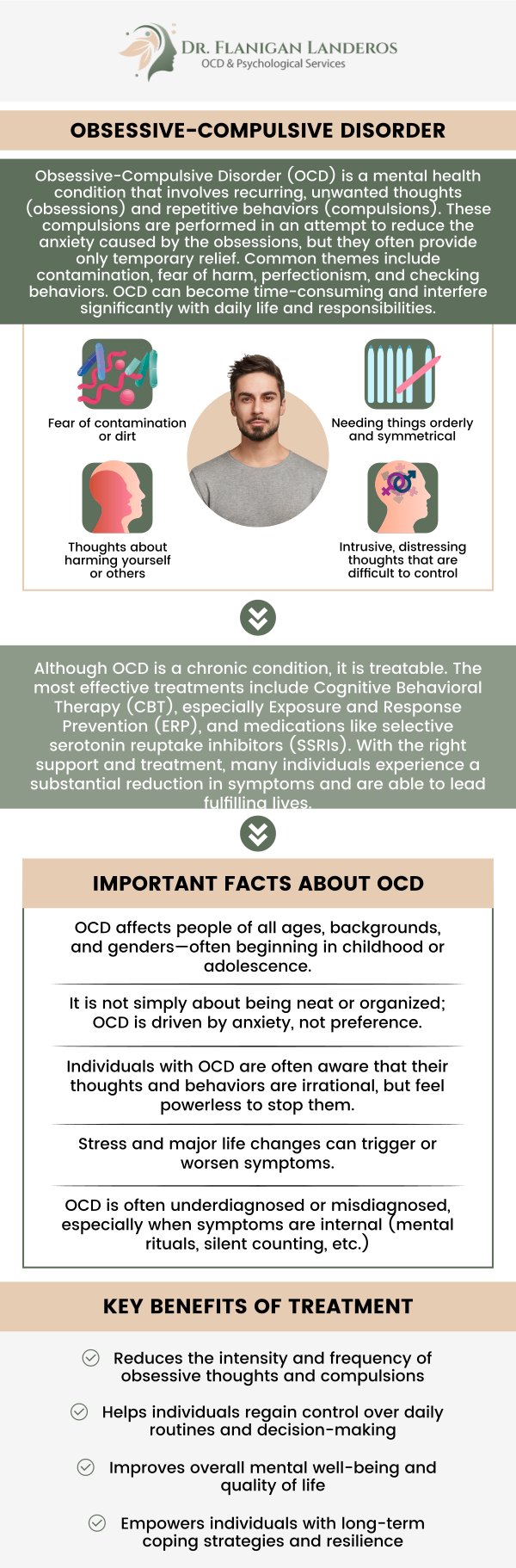

Table of Contents:
What are the common symptoms of OCD in women?
How does OCD affect women differently from men?
Can pregnancy or postpartum changes trigger OCD symptoms in women?
How can therapy help women with OCD?
Women’s Mental Health: Identifying OCD Symptoms with Dr. Katie Flanigan-Landeros
At Dr. Katie Flanigan Landeros OCD & Psychological Services, we understand that Obsessive-Compulsive Disorder (OCD) in women often presents as a combination of obsessions and compulsions that can significantly disrupt daily life.
The common symptoms of OCD in women include:
• Persistent, unwanted thoughts (obsessions): Intrusive thoughts that cause distress, often centered around contamination, harm, or mistakes.
• Repetitive behaviors or mental rituals (compulsions): Actions performed to alleviate the anxiety caused by obsessions, such as excessive handwashing, checking, or cleaning.
• Fears of contamination: Anxiety around germs, illness, or environmental toxins, leading to excessive cleaning or avoidance of certain objects or places.
• Compulsive checking: Repeatedly verifying locks, appliances, or other tasks due to fears of harm or making mistakes.
• Need for symmetry or order: An overwhelming desire for things to be arranged “just right,” leading to repetitive organizing, counting, or arranging.
• Intrusive, distressing thoughts: Unwanted thoughts, often violent, sexual, or religious in nature, that cause significant anxiety and guilt.
• Heightened sense of responsibility: Feeling an intense need to prevent harm, even if it’s unrealistic or irrational, leading to compulsive behaviors.
• Guilt or shame: Overwhelming feelings of guilt or shame related to obsessive thoughts or compulsive actions, often exacerbated by societal or familial expectations.
These symptoms can significantly impact daily life, relationships, and mental well-being. Dr. Flanigan Landeros specializes in compassionate, evidence-based treatment for OCD, offering personalized care to help women manage their symptoms and reclaim their daily lives.
At Dr. Katie Flanigan Landeros OCD & Psychological Services, we recognize that Obsessive-Compulsive Disorder (OCD) can present differently across individuals, particularly when considering gender-specific factors. Obsessive-compulsive disorder (OCD) can manifest differently in women compared to men, often influenced by hormonal fluctuations, societal expectations, and unique symptom patterns. While the core symptoms—obsessions (intrusive thoughts) and compulsions (repetitive behaviors)—are similar across genders, the content of the obsessions and the types of compulsions often vary.
In women, OCD tends to emerge during periods of significant hormonal changes, such as adolescence, pregnancy, or postpartum. These hormonal shifts can exacerbate the severity of symptoms. Women with OCD are also more likely to experience obsessions around cleanliness, contamination, and the safety of loved ones, often linked to the societal pressures placed on them regarding caregiving roles. These symptoms may lead to compulsive behaviors such as excessive cleaning or checking. Additionally, women are more likely to experience comorbid conditions, such as anxiety or depression, which can complicate diagnosis and treatment.
Furthermore, women may be more susceptible to the social stigma surrounding mental health, especially in cultures where caregiving responsibilities are seen as a woman’s duty. This societal expectation can lead to delayed help-seeking, as women may feel pressure to conceal their symptoms to avoid being perceived as inadequate or weak. The intersection of hormonal factors and societal pressures makes it critical for women to receive tailored care for OCD.
Dr. Katie Flanigan Landeros offers compassionate, evidence-based treatment tailored to the specific needs of women struggling with OCD. By addressing hormonal influences, co-occurring mental health concerns, and the unique social pressures women face, our team provides comprehensive care to help women achieve lasting improvement and overall well-being.
At Dr. Katie Flanigan Landeros OCD & Psychological Services, we understand that pregnancy and the postpartum period are times of profound change—physically, emotionally, and psychologically. For many women, these transitions can trigger or intensify symptoms of obsessive-compulsive disorder (OCD).
OCD is a medical condition characterized by persistent, unwanted thoughts (obsessions) and repetitive behaviors or mental rituals (compulsions) that are performed to ease anxiety. During pregnancy or after childbirth, women may experience obsessions such as fears of harming their baby, worries about contamination, or doubts about their parenting abilities. These distressing thoughts often lead to compulsions like excessive cleaning, checking on the baby frequently, or seeking reassurance from others.
Research shows that the perinatal period (pregnancy and postpartum) is a time of increased risk for the onset or worsening of OCD, particularly for those with a personal or family history of anxiety or mood disorders. New-onset OCD can appear during pregnancy or within weeks after delivery, and it is important to recognize that these symptoms are not uncommon.
Dr. Katie Flanigan Landeros provides evidence-based care, including cognitive-behavioral therapy (CBT) and exposure and response prevention (ERP), which are considered the gold standard treatments for OCD. If you are experiencing intrusive thoughts or compulsive behaviors during or after pregnancy, know that you are not alone—and that effective help is available. We are here to provide compassionate, expert care tailored to your needs.
At Dr. Katie Flanigan Landeros OCD & Psychological Services, therapy is at the heart of our approach to helping women manage and overcome the unique challenges posed by obsessive-compulsive disorder (OCD). Therapy can be incredibly effective in helping women with OCD by addressing the unique ways the disorder manifests in their lives. Cognitive-behavioral therapy (CBT), particularly a form called Exposure and Response Prevention (ERP), is the most common and evidence-based treatment for OCD.
For women, therapy helps in several key ways:
• Managing Obsessions and Compulsions: CBT helps women identify and challenge the intrusive thoughts (obsessions) that fuel compulsive behaviors. Through ERP, women are gradually exposed to the feared situations and learn how to resist the compulsions, breaking the cycle of anxiety and avoidance that perpetuates the disorder.
• Addressing Hormonal Influences: Since OCD symptoms in women can fluctuate with hormonal changes (such as during menstruation, pregnancy, or menopause), therapy can help women recognize these patterns and develop coping strategies tailored to managing symptoms during these times.
• Reducing Anxiety and Depression: Therapy also addresses common comorbid conditions like anxiety and depression, which often accompany OCD. By managing these underlying issues, therapy provides a more holistic approach to improving mental well-being.
• Building Coping Skills: Therapy helps women develop healthy coping mechanisms to deal with stress, societal pressures, and the emotional toll of OCD. It also provides a supportive space to explore the impact of OCD on personal identity, relationships, and daily functioning.
By helping women understand the nature of OCD and providing strategies to challenge unhelpful thought patterns, therapy empowers them to regain control over their lives and reduce the disorder’s impact. Above all, our mission is to help women reclaim their lives from OCD. Through compassionate care and specialized expertise, Dr. Flanigan Landeros supports clients in building self-confidence, reducing feelings of shame or isolation, and reestablishing a sense of control. With effective therapy, women can enhance their quality of life, strengthen their relationships, and move forward with resilience and hope.
Dr. Katie Flanigan-Landeros, a clinical psychologist, specializes in women’s mental health and is deeply committed to identifying and addressing OCD symptoms in women. OCD in women often presents unique challenges, including obsessions related to cleanliness, safety, and the well-being of loved ones. Hormonal fluctuations during pregnancy, postpartum, or menopause can intensify OCD symptoms, highlighting the need for personalized care for women. Dr. Flanigan-Landeros specializes in understanding how these hormonal changes affect OCD, offering customized treatment strategies to help women effectively manage their symptoms.
With her extensive expertise in women’s mental health, Dr. Flanigan-Landeros utilizes evidence-based therapies, including Cognitive Behavioral Therapy (CBT) and Exposure and Response Prevention (ERP), to help women regain control over their lives. She takes a compassionate, patient-centered approach, recognizing the emotional and societal pressures women face, which can delay treatment. By creating a supportive environment, Dr. Flanigan-Landeros helps women navigate their OCD symptoms and empowers them to break free from the cycle of compulsive behaviors and intrusive thoughts.
For more information, contact us or schedule an appointment online. We are conveniently located at 400 Continental Blvd FL 6, Suite A El Segundo, CA 90245. We serve patients from El Segundo CA, Santa Monica CA, Inglewood CA, Gardena CA, Torrance CA, Hawthorne CA, Culver City CA, Westmont CA, West Los Angeles CA and surrounding areas.

Check Out Our 5 Star Reviews


Additional Services You May Need
▸ Anxiety
▸ Depression
▸ OCD
▸ Relationships
▸ Individual Psychotherapy
▸ Psychological Testing
▸ ADHD
▸ Telehealth
▸ Seasonal Mood Changes
▸ Cognitive Behavioral Therapy
▸ Life Transition
▸ Acceptance and Commitment Therapy (ACT)
▸ Exposure With Response Prevention (ERP)
▸ Dialectical Behavior Therapy (DBT)
▸ OCD Subtypes
▸ Perfectionism
▸ Group Therapy

Additional Services You May Need
▸ Anxiety
▸ Depression
▸ OCD
▸ Relationships
▸ Individual Psychotherapy
▸ Psychological Testing
▸ ADHD
▸ Telehealth
▸ Seasonal Mood Changes
▸ Cognitive Behavioral Therapy
▸ Life Transition
▸ Acceptance and Commitment Therapy (ACT)
▸ Exposure With Response Prevention (ERP)
▸ Dialectical Behavior Therapy (DBT)
▸ OCD Subtypes
▸ Perfectionism
▸ Group Therapy