
What Are the Subtypes of OCD?
Obsessive-Compulsive Disorder (OCD) is a complex mental health condition that manifests in various ways, with different subtypes affecting individuals in unique ways. Each subtype presents its own challenges and requires tailored therapeutic approaches for effective treatment. Dr. Katie Flanigan-Landeros specializes in treating OCD and its subtypes, helping patients manage their symptoms and improve their quality of life through evidence-based therapies like CBT and ERP. For more information, contact us or schedule an appointment online. We are conveniently located at 400 Continental Blvd FL 6, Suite A El Segundo, CA 90245.
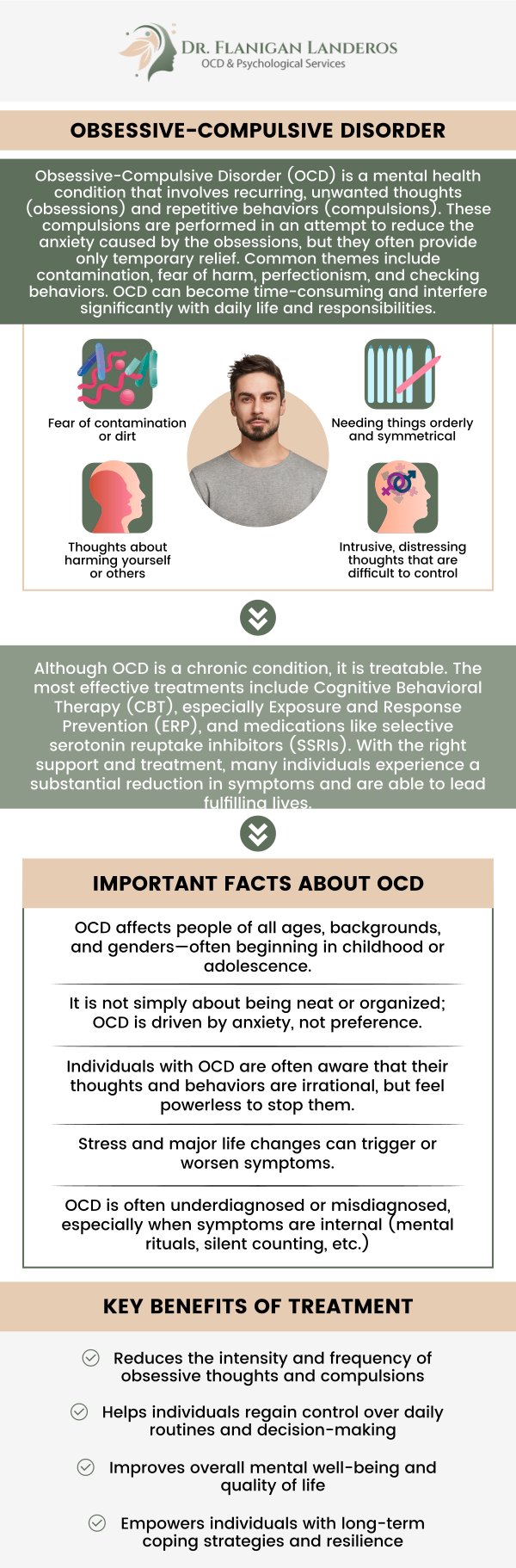

Table of Contents:
What are the main subtypes of OCD?
Which subtypes of OCD are most common?
What symptoms define each subtype of OCD?
Can a person have more than one subtype of OCD?
Understanding the Subtypes of OCD with Dr. Katie Flanigan-Landeros in Santa Monica, El Segundo, CA
At Dr. Katie Flanigan-Landeros OCD & Psychological Services, we recognize that Obsessive-Compulsive Disorder (OCD) is a complex and uniquely experienced condition. Dr. Flanigan Landeros specializes in the assessment and treatment of OCD across its many forms, recognizing that each person’s experience is unique.
OCD can present in several main subtypes, and understanding these patterns is a key step in providing effective, personalized care. Some of the most common presentations we see in our practice include:
• Contamination and Cleaning: Individuals with this subtype experience persistent fears about germs, illness, or contamination. This often leads to excessive washing or cleaning rituals in an effort to reduce anxiety and distress.
• Checking: This subtype is characterized by repeated checking behaviors—such as ensuring doors are locked or appliances are turned off—driven by fears of harm, danger, or catastrophe.
• Symmetry and Ordering: Some people feel a strong need for things to be symmetrical, arranged in a particular way, or repeated until they feel “just right.” This can involve arranging objects or performing actions in a specific sequence.
• Intrusive Thoughts or “Pure Obsessions”: These are marked by unwanted, distressing thoughts, images, or impulses, often about taboo topics. Although there may be few visible compulsions, individuals frequently engage in mental rituals or seek reassurance to neutralize these thoughts.
• Hoarding: While now recognized as a separate disorder, hoarding—persistent difficulty discarding items regardless of value—can still occur alongside OCD and is carefully addressed in our practice.
It’s important to remember that many people with OCD experience symptoms that span more than one subtype, and these symptoms may change over time. At Dr. Katie Flanigan Landeros OCD & Psychological Services, our approach is to thoroughly assess your unique experience and develop a tailored treatment plan—often utilizing evidence-based therapies such as Exposure and Response Prevention (ERP)—to help you manage your symptoms and improve your quality of life.
At Dr. Katie Flanigan-Landeros OCD & Psychological Services, we recognize that Obsessive-Compulsive Disorder (OCD) is a complex and frequently misinterpreted mental health condition. OCD involves persistent, intrusive thoughts (obsessions) and repetitive actions or mental rituals (compulsions) that can significantly impact daily functioning. Our practice specializes in the thorough assessment and effective treatment of OCD, focusing on a variety of its most prevalent subtypes.
Some of the OCD subtypes we frequently encounter include:
• Contamination OCD: Individuals experience excessive fears about germs, dirt, or illness, leading to compulsive cleaning or handwashing rituals.
• Checking OCD: This subtype involves repeated checking behaviors—such as verifying if doors are locked or appliances are turned off—driven by fears of harm, mistakes, or accidents.
• Symmetry and Ordering OCD: Clients with this presentation often feel compelled to arrange objects in a precise or symmetrical way, striving for order and exactness.
• Intrusive Thoughts (Taboo or Harm OCD): These individuals struggle with unwanted, distressing thoughts about taboo topics, such as violence, sexual content, or religious blasphemy, and may engage in mental rituals or seek reassurance to alleviate anxiety.
Dr. Katie Flanigan Landeros recognizes that OCD does not look the same for everyone. Many individuals experience a combination of symptoms that span multiple subtypes, and the way OCD presents can be unique to each person. Dr. Flanigan Landeros utilizes evidence-based approaches, such as Cognitive Behavioral Therapy (CBT) and Exposure and Response Prevention (ERP), to help clients manage their symptoms and regain control over their lives. If you or a loved one is experiencing symptoms of OCD, you are not alone. Our team is here to provide compassionate, specialized care tailored to your individual needs.
At Dr. Katie Flanigan Landeros OCD & Psychological Services, we understand that Obsessive-Compulsive Disorder (OCD) can manifest in a variety of ways, each presenting unique challenges for individuals and their families. Recognizing the specific subtype of OCD is an important first step in developing an effective, personalized treatment plan.
• Contamination OCD: Individuals with contamination OCD often experience persistent fears related to germs, illness, or environmental toxins. This may lead to excessive cleaning, handwashing, or avoiding certain places or objects. Therapy for this subtype typically involves gradually confronting these fears to reduce compulsive behaviors and improve daily functioning.
• Symmetry & Ordering OCD: This subtype of OCD involves a strong need for things to be arranged, counted, or ordered in a specific way. The anxiety associated with symmetry or order can be overwhelming, and therapy focuses on helping individuals become more comfortable with uncertainty and imperfection, reducing the need for repetitive organizing or arranging.
• Checking OCD: People with checking OCD frequently feel the need to verify things like locks, appliances, or tasks, driven by fears of harm or making mistakes. Treatment aims to break the cycle of doubt and reassurance, helping individuals reduce compulsive checking behaviors and restore peace of mind.
• Intrusive Thoughts OCD: This subtype involves unwanted, distressing thoughts that often cause significant anxiety. These thoughts may be violent, sexual, or religious in nature. Therapy focuses on reducing the impact of these thoughts and breaking the compulsive mental rituals associated with them, allowing individuals to regain control over their thoughts.
• Hoarding OCD: Individuals with hoarding OCD struggle with discarding possessions, leading to clutter and emotional distress. Therapy for hoarding behaviors helps individuals understand the root causes of their hoarding tendencies and work toward developing healthier relationships with possessions and reducing clutter in their lives.
At Dr. Katie Flanigan Landeros OCD & Psychological Services, we know that OCD symptoms often overlap, and each person’s experience is unique. Our practice offers compassionate, evidence-based care tailored to your specific needs, whether you identify with one subtype or several.
A person can experience multiple subtypes of OCD simultaneously. Many individuals with OCD may exhibit symptoms from more than one subtype, such as contamination OCD combined with checking OCD, or symmetry OCD with intrusive thoughts. These overlapping symptoms can complicate the condition and make it more challenging to manage, as different compulsions and obsessions interact with one another.
Treatment for individuals with multiple subtypes of OCD typically involves a comprehensive approach that targets all of their symptoms. Therapies like Cognitive Behavioral Therapy (CBT), particularly Exposure and Response Prevention (ERP), can be effective in addressing the various compulsions and intrusive thoughts associated with different subtypes. By gradually confronting their fears and reducing compulsive behaviors across multiple areas, individuals can achieve better control over their OCD symptoms and improve their overall quality of life.
Recognizing the unique and overlapping ways OCD can present is vital for effective diagnosis and treatment. At Dr. Katie Flanigan Landeros OCD & Psychological Services, we offer evidence-based interventions such as cognitive-behavioral therapy (CBT) with exposure and response prevention (ERP), which can be tailored to address the specific symptoms and subtypes you or your loved one may be experiencing.
Dr. Katie Flanigan-Landeros, a compassionate therapist serving Santa Monica, El Segundo, CA, specializes in treating the various subtypes of Obsessive-Compulsive Disorder (OCD). Whether it’s contamination OCD, symmetry OCD, checking behaviors, intrusive thoughts, or hoarding OCD, Dr. Flanigan-Landeros offers tailored treatment plans that address the unique challenges of each subtype. She works with clients to help them understand the root causes of their symptoms and implement effective strategies to reduce compulsive behaviors and intrusive thoughts.
Through evidence-based therapies like Cognitive Behavioral Therapy (CBT) and Exposure and Response Prevention (ERP), Dr. Flanigan-Landeros supports individuals in confronting their fears and learning how to manage their OCD symptoms. Her goal is to empower clients to regain control of their lives, reduce anxiety, and improve overall mental well-being by providing a safe and supportive environment for healing.
For more information, contact us or schedule an appointment online. We are conveniently located at 400 Continental Blvd FL 6, Suite A El Segundo, CA 90245. We serve patients from El Segundo CA, Santa Monica CA, Inglewood CA, Gardena CA, Torrance CA, Hawthorne CA, Culver City CA, Westmont CA, West Los Angeles CA and surrounding areas.

Check Out Our 5 Star Reviews


Additional Services You May Need
▸ Anxiety
▸ Depression
▸ OCD
▸ Relationships
▸ Individual Psychotherapy
▸ Psychological Testing
▸ ADHD
▸ Telehealth
▸ Seasonal Mood Changes
▸ Cognitive Behavioral Therapy
▸ Life Transition
▸ Acceptance and Commitment Therapy (ACT)
▸ Exposure With Response Prevention (ERP)
▸ Dialectical Behavior Therapy (DBT)
▸ OCD Subtypes
▸ Perfectionism
▸ Group Therapy

Additional Services You May Need
▸ Anxiety
▸ Depression
▸ OCD
▸ Relationships
▸ Individual Psychotherapy
▸ Psychological Testing
▸ ADHD
▸ Telehealth
▸ Seasonal Mood Changes
▸ Cognitive Behavioral Therapy
▸ Life Transition
▸ Acceptance and Commitment Therapy (ACT)
▸ Exposure With Response Prevention (ERP)
▸ Dialectical Behavior Therapy (DBT)
▸ OCD Subtypes
▸ Perfectionism
▸ Group Therapy